Mastering Dynamics CCaaS: Workstreams vs Unified Routing
If you’re new to Dynamics 365 Customer Service, or beginning to explore the opportunities of Dynamics CCaaS, terms like workstreams, basic routing, and unified routing can feel a little bit like learning a foreign language (at least it did for me anyway!). Yet these are the backbone of how customer interactions flow through your service organisation. I’ve written this blog to strip away the jargon and provide you with a practical, hands-on guide to not only understand the application but to also get you (yes YOU!) TO challenge your legacy processes and unlock better outcomes.
Routing Explained
Basic Routing: Simple queue-based rules. Great for small, predictable scenarios but limited for multi-channel or complex requirements.
Unified Routing: Adds intelligence such :
Skills. This is where a customer is being routed to a person who can handle their query straight away. Maybe its a certain product, language, department. This can be considered the agent’s skill set.
Capacity. This is where an agent will be assigned the total number of calls or live chats they can handle at one time. So if they’re on a call we can ensure that no additional calls are routed to them.
Capacity Profiles should be built to respect the reality of the workplace. When defining profiles it is important to limit concurrency by channel and agent seniority.
An example to consider:Beginner: 1 chat, 1 email
Advanced: 3 chats, 2 emails
Priority. Maybe different customers have different memberships or different issues have higher priorities. We can ensure they’re not left waiting longer than they should.
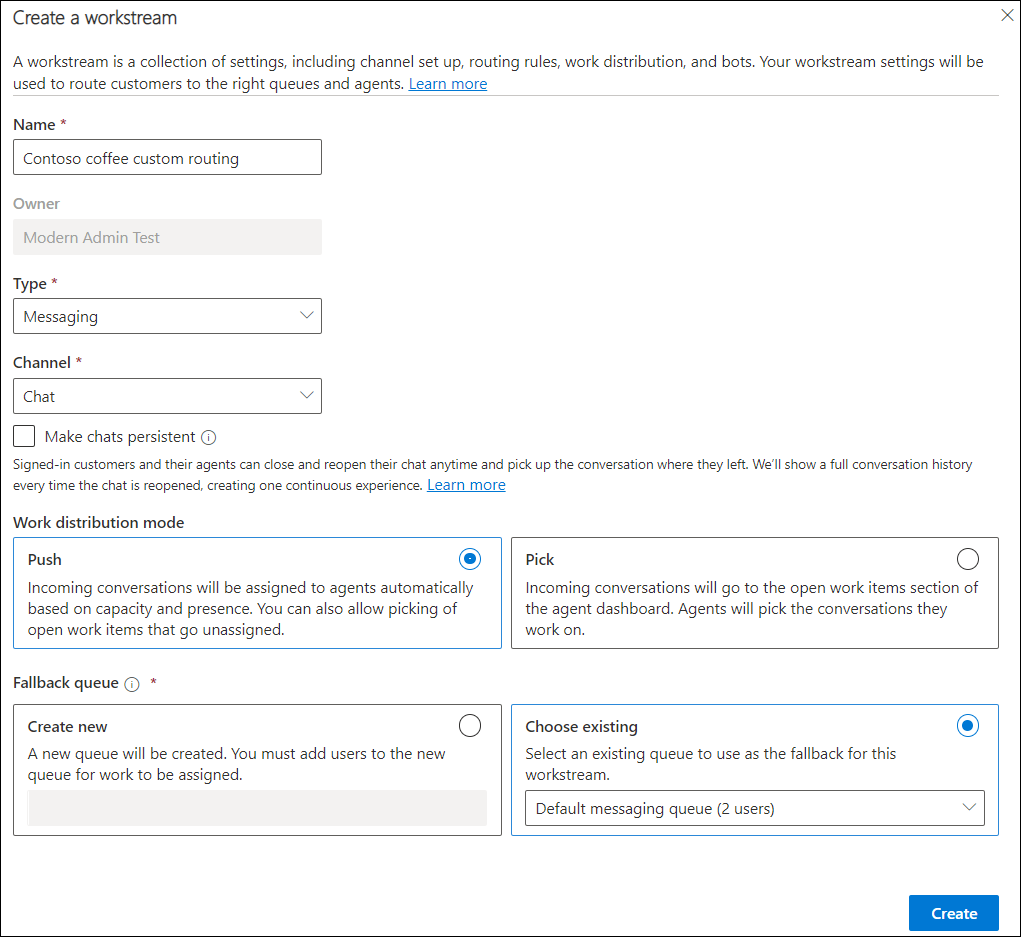
Workstreams: Think of these as containers for channels (voice, messaging, records) and routing logic. They define how work enters the system and gets distributed.
When to Use Basic vs Unified Routing
Unified Routing: Multi-channel, skills/capacity sensitivity, dynamic prioritisation.
Basic Routing: Narrow, stable scenarios with minimal complexity.
Hybrid: Preserve basic rules for intake while gradually layering classification and skills.
So in short, if you need multi-channel consistency, skills-based assignment, or dynamic prioritisation, unified routing is where you should start!
Workstreams: Your First Setup
Create a workstream (e.g. Messaging) and identify the Channel (Voice, Chat etc).
Choose assignment mode: Push or Pick
Add queues and select assignment method (round-robin, highest capacity, least active).
Configure classification rulesets: set priority, category, skills, and route-to-queue.
Enable skill-based routing: define skills, rating models, and matching logic.
Follow best practices: configure queues → resources → skills → capacity profiles → roles.
What has become obvious to me whilst working at TTEC Digital and supporting customers with a CCaaS Implementation
Discovery isn’t a checklist—it’s a conversation which starts waaaaay before the project is handed over to the Delivery Team.
One of the most striking things I’ve observed at TTEC Digital is how deeply committed our sales leaders, Dan Snowdon and Oliver Knowles, are to understanding the customer’s world. They don’t stop at surface-level requirements—they dive into the real pain points organisations face today, asking the right questions to uncover what truly matters. This isn’t about selling a solution; it’s about shaping outcomes that make a difference.
From my seat in these conversations, supporting from a technical perspective, I’ve seen firsthand how this approach sets the tone for everything that follows. Over the past six months, working closely with Dan Barzotti has reinforced this even further. Dan challenges conventional thinking—like the assumption that “more rules = better control” (Spoiler alert: it doesn’t) and has given me the confidence to challenge too. Instead, he demonstrates how simplicity, paired with precision, drives better results. This philosophy is at the core of how TTEC Digital partners with customers: reducing complexity, aligning skills to needs, and creating clarity that empowers teams to deliver exceptional experiences.