Understanding Real-Time Voice Agents in Dynamics 365 Contact Center
"Press 1 for Sales. Press 2 for Support. Press 3 to hear these options again."
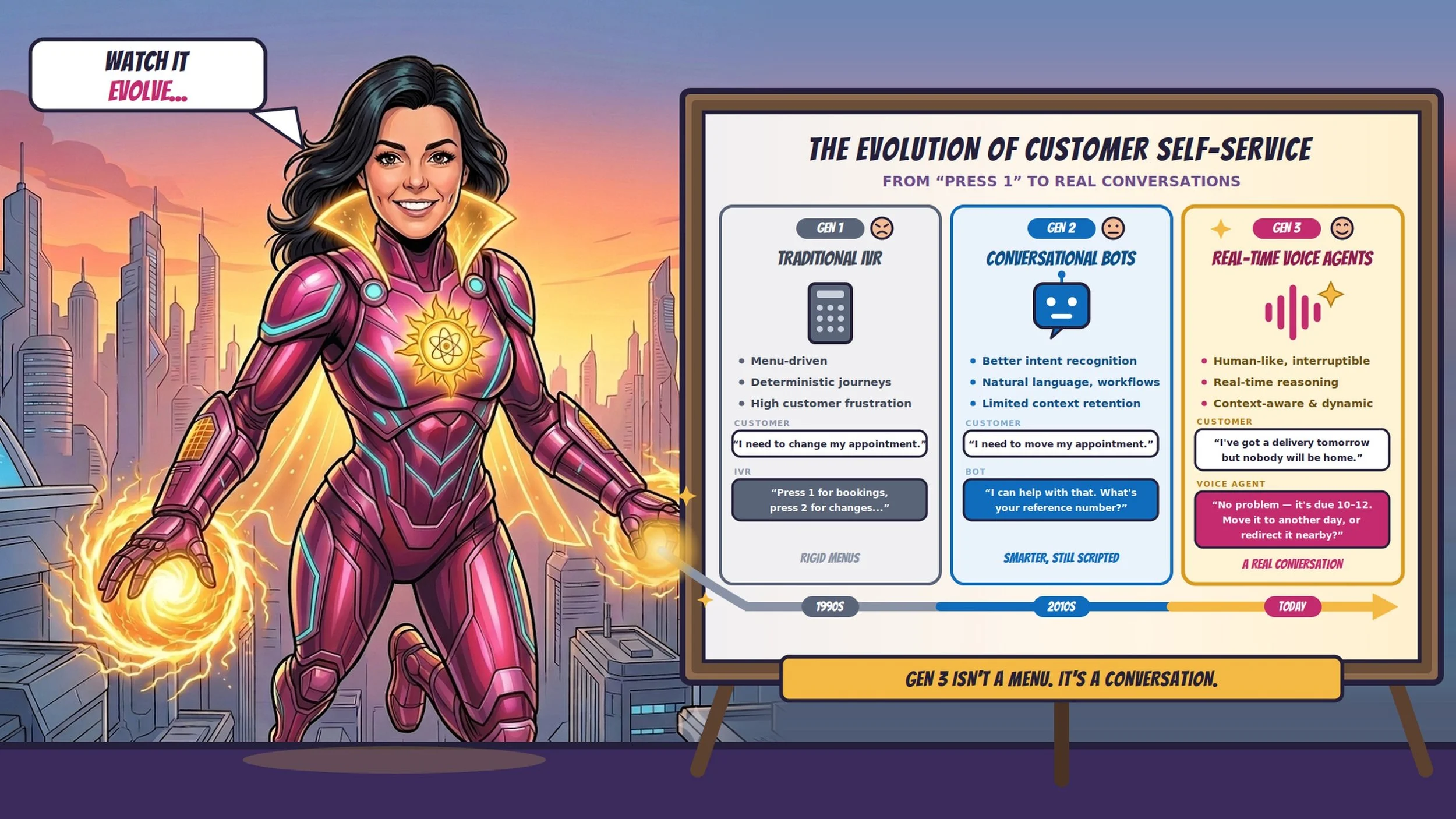
For decades, customers have tolerated IVRs because there was no practical alternative. Today, Dynamics 365 Contact Center introduces a new approach through real-time voice agents, allowing customers to simply speak naturally and have an AI understand, reason, and respond in real time. Rather than navigating menus, customers can hold a conversation.
So What Actually Is a Real-Time Voice Agent?
Microsoft describes real-time voice agents as speech-to-speech AI experiences built in Copilot Studio and deployed directly into Dynamics 365 Contact Center. Rather than converting speech into a structured workflow, the AI can listen, understand intent, reason, and respond naturally in near real time.
The result is:
Lower latency
More natural conversations
Less "robotic" interactions
Better containment rates
Improved customer experience
The Biggest Misconception: Real-Time Voice Agents Are NOT Replacing IVR
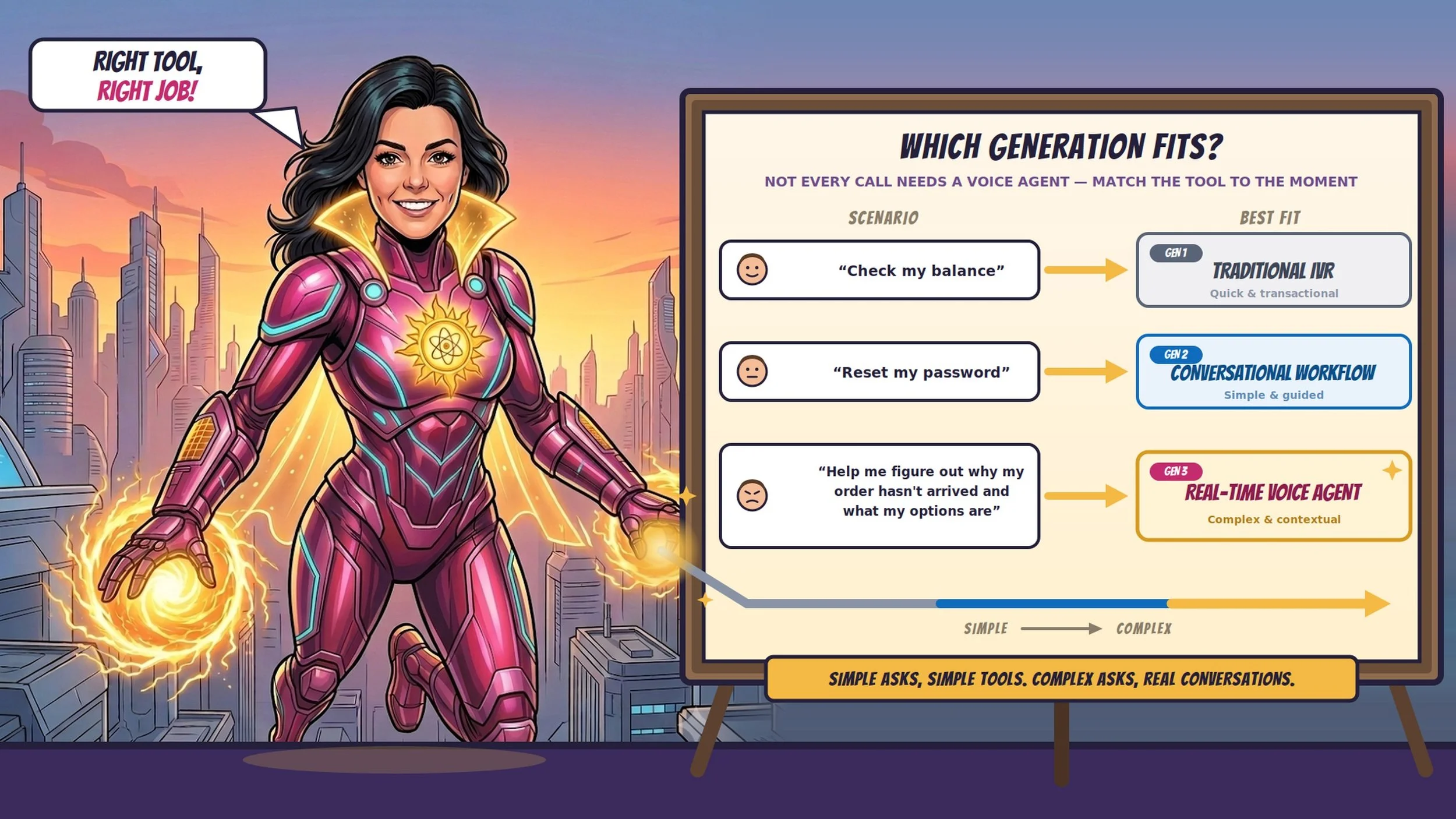
Microsoft is very clear on this point. The future is not a choice between IVR and AI.
It's about using the right tool for the right interaction.
Microsoft positions real-time voice as an expansion of the voice support spectrum, alongside existing IVR capabilities rather than replacing them
Where This Gets Really Interesting
For Dynamics 365 Contact Center customers, real-time voice agents become even more powerful when connected to business systems.
Imagine a housing association:
Tenant "My boiler has stopped working and I've got two young children."
The voice agent could:
Identify the tenant
Check vulnerability status
Review previous repair history
Create a case
Book the first available engineer
Escalate based on business rules
All within a natural conversation and without waiting for a human agent. This is a potential use case enabled by combining Contact Center, Copilot Studio, and enterprise data.
What This Means for Contact Centres
The conversation is shifting from:
"How many calls can we deflect?" to "How many customer journeys can we successfully resolve?"
That's a fundamental change. The goal isn't simply automation.
The goal is resolution.
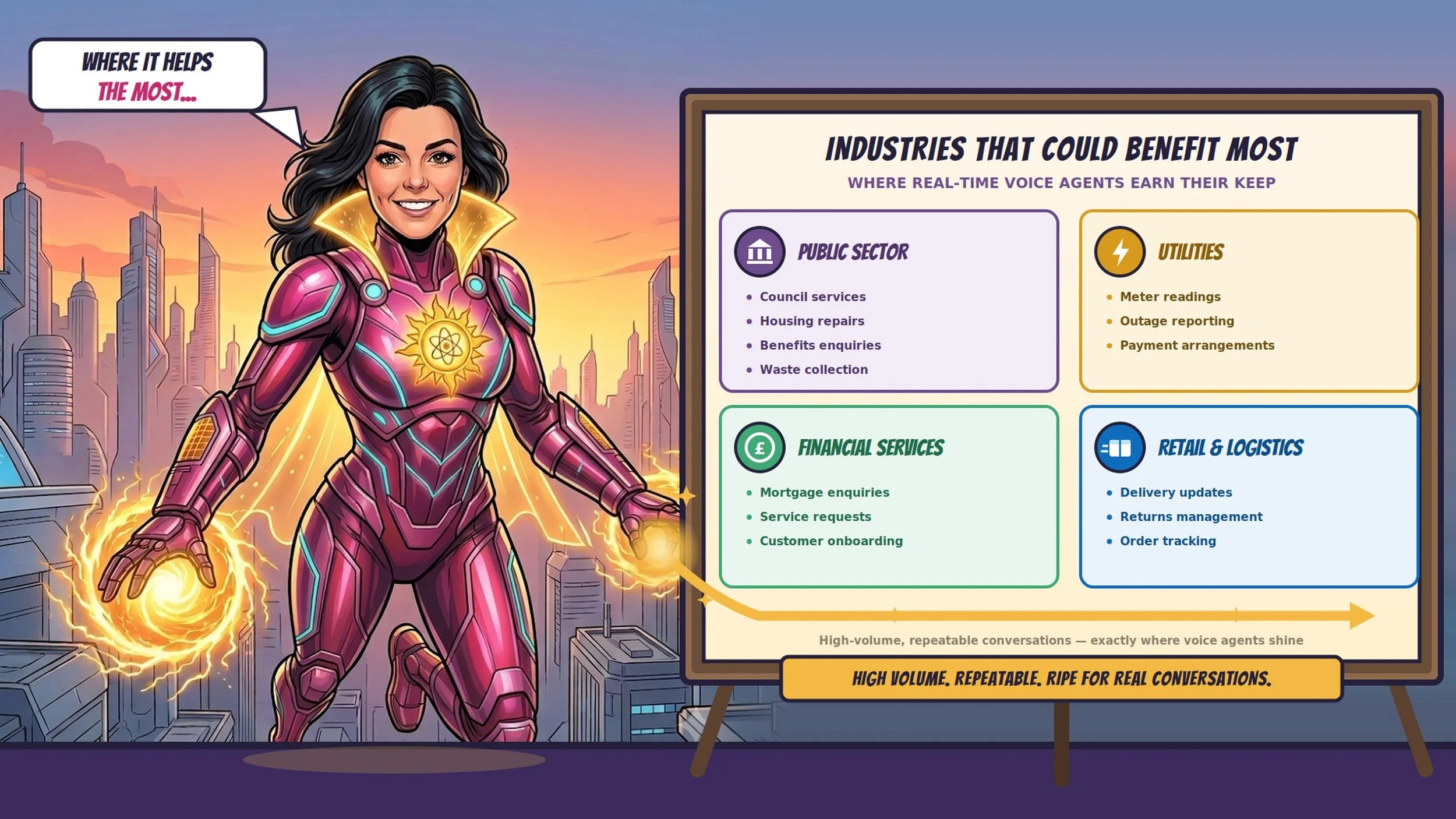
Real-time voice agents offer organisations the opportunity to automate more complex interactions while still providing a conversational experience that customers actually want to use.
Final Thought
The most successful organisations won't replace all their IVRs with AI.
They'll build a layered strategy:
Deterministic IVR for simple transactions
Conversational AI for guided processes
Real-time voice agents for complex, natural interactions
Human agents for high-empathy and exception scenarios
The future of customer experience isn't IVR versus AI. It's about orchestrating the right experience at the right moment.